

Small Black Worms in the Shower? Here’s What They Usually Are
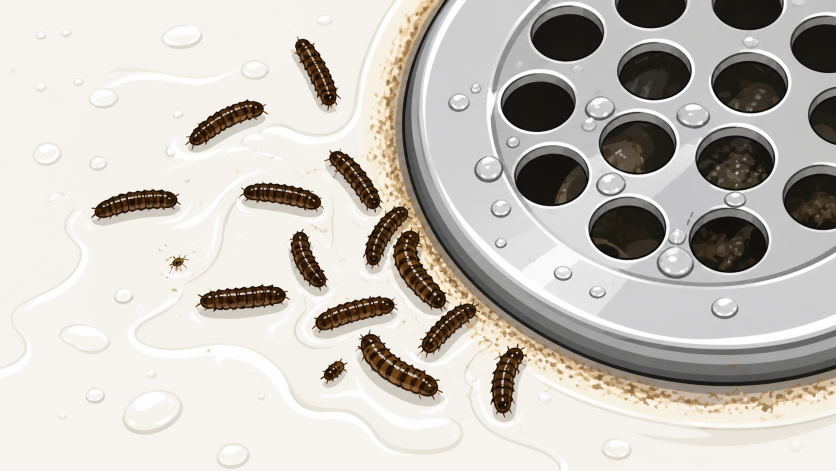
Finding small black worms in your shower is unsettling, but in most cases, they are not actually worms. They are usually drain fly larvae living in the organic buildup inside your shower drain.
Drain fly larvae feed on the slimy film that collects inside drains. If your shower drain has soap scum, hair, skin cells, standing water, or slow drainage, it can become an ideal place for them to breed.
The good news: this problem is usually fixable. The key is not just killing the larvae you see. You need to remove the gunk inside the drain where they are living.
Quick Answer: What Are the Small Black Worms in My Shower?
Small black or dark brown “worms” in the shower are most commonly drain fly larvae.
They may look like tiny worms, but they are the immature stage of drain flies. Adult drain flies are small, fuzzy, moth-like flies that often hang around bathroom walls, shower stalls, sinks, or drains.
You may have drain fly larvae if you notice:
- Tiny black, brown, or gray worm-like larvae near the shower drain
- Small fuzzy flies resting on the bathroom wall
- A slow-draining shower
- A musty, sewer-like, or dirty-drain odor
- Larvae appearing again after you rinse them away
If the larvae keep coming back, the drain likely still has organic buildup inside it.
Are They Dangerous?
Drain fly larvae are generally more of a nuisance than a serious danger. They are not usually considered harmful to people, and they do not bite.
However, they are still a sign that something inside the drain needs attention. Their presence usually means there is enough decaying organic material in the drain to support breeding.
You should take the issue more seriously if:
- The shower drain smells like sewage
- Multiple drains in your home have larvae or flies
- The drain is slow, clogged, or backing up
- You see insects around toilets, sinks, tubs, or floor drains
- The problem returns soon after cleaning
In those cases, you may have a deeper plumbing or moisture issue that needs professional help.
How to Confirm They Are Coming From the Shower Drain
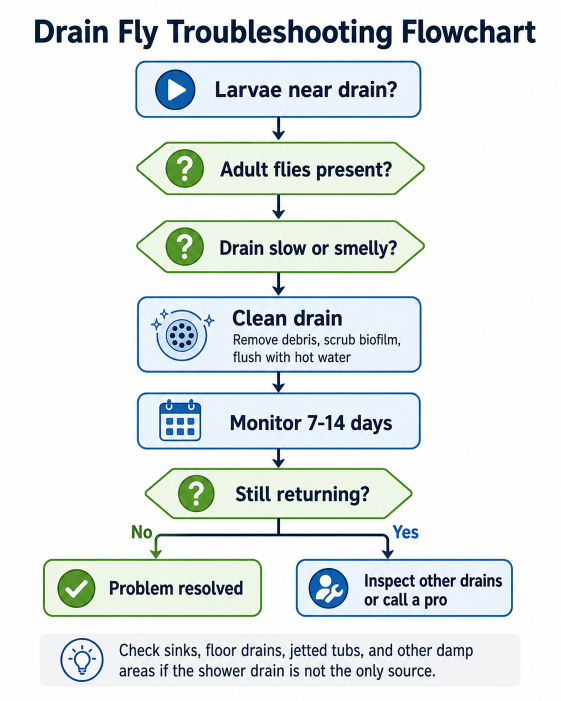
Before treating the drain, confirm the source. Drain fly larvae are usually found near the drain, but adult drain flies can breed in other damp areas too.
Try this simple drain test:
- Dry the area around the shower drain.
- Place a strip of clear tape sticky-side down over part of the drain opening.
- Do not completely seal the drain. Leave some airflow.
- Leave the tape overnight.
- Check it the next morning for small flies stuck to the tape.
If adult drain flies are caught on the tape, the shower drain is likely one of the breeding sources.
You can also inspect nearby areas, including:
- Shower drain covers
- Sink drains
- Overflow openings
- Floor drains
- Toilet bases
- Damp grout lines
- Leaky pipes under sinks
- Jetted tub lines
- Rarely used drains
If you only clean the shower drain but the real breeding source is somewhere else, the problem will come back.
Author note: In my case, the larvae were showing up near the shower drain, but the adult drain flies were also resting near the jetted tub. That helped me realize the source might not be only the visible shower floor. If you see adult flies in another damp area, check that area too before assuming the shower drain is the only problem.
Why Drain Fly Larvae Show Up in Showers
Drain fly larvae appear when adult drain flies find a damp place with enough organic matter to lay eggs.
Common causes include:
- Hair and soap scum in the drain
- Biofilm inside the drain pipe
- Slow drainage
- Standing water in the shower
- A drain that is rarely used
- Dirty drain covers
- Moisture around the shower base
- Plumbing leaks
- Poor bathroom ventilation
The larvae are not appearing because your shower is “dirty” in a general sense. Even clean bathrooms can develop buildup inside drains where you cannot easily see it.
What Not to Do First
Before pouring products down the drain, avoid these common mistakes.
Safety warning: Never mix bleach with vinegar, ammonia, drain cleaner, toilet cleaner, or any other household cleaning product. Mixing cleaners can create dangerous fumes. Use only one cleaning method at a time, follow the product label, wear gloves when needed, and ventilate the bathroom.
For most homeowners, the safest first step is physical cleaning: remove the drain cover, pull out hair and debris, scrub the inside of the drain, and flush it with hot water before using any chemical product.
Do not mix cleaning chemicals
Never mix bleach with vinegar, ammonia, drain cleaner, toilet cleaner, or any other household cleaning product. Mixing chemicals can create dangerous fumes.
Use only one cleaning method at a time, follow the product label, and ventilate the bathroom.
Do not rely on bleach alone
Bleach may kill some larvae on contact, but it often does not remove the sticky organic buildup inside the drain. If the food source remains, the infestation can return.
Do not ignore slow drains
If your shower drains slowly, larvae may be a symptom of a bigger clog or buildup problem. Cleaning the visible drain opening may not be enough.
Do not use harsh drain cleaner repeatedly
Chemical drain cleaners can be dangerous if misused and may damage some plumbing materials. They can also be risky for septic systems. If you use one, follow the label exactly and do not combine it with any other product.

How to Get Rid of Small Black Worms in the Shower
Supplies Needed
- Rubber gloves
- Screwdriver
- Paper towels
- Plastic drain snake
- Long drain brush
- Hot water
- An enzyme or foaming drain cleaner labeled for bathroom drains
The best approach is to remove the drain fly breeding material, not just rinse away the larvae you can see.
- Remove the visible larvae
Rinse the shower floor and drain area with hot water. Wipe up any visible larvae with a disposable paper towel or cleaning cloth.
This removes what you can see, but it will not solve the problem by itself. - Take off the drain cover
If possible, remove the shower drain cover. Hair, soap scum, and dark buildup often collect underneath it.
Wear gloves and place the screws somewhere safe if your drain cover is screwed in.
If the cover is stuck, corroded, or difficult to remove, do not force it. You may damage the drain or shower surface. - Pull out hair and debris
Use a drain cleaning tool, plastic drain snake, or gloved hand to remove visible hair and debris near the drain opening.
Avoid pushing the clog deeper into the pipe. The goal is to pull buildup out, not force it down.
Dispose of the debris in the trash, not back into the shower. - Scrub inside the drain
This is the most important step.
Use a long, narrow drain brush to scrub the inside walls of the drain. Drain fly larvae feed on the slimy film that sticks to the pipe, so physical scrubbing is often more effective than simply pouring liquid into the drain.
Scrub as far as you safely can reach without damaging the plumbing.
Then flush the drain with hot water. - Use an enzyme or foaming drain cleaner
An enzyme-based or foaming drain cleaner can help break down organic buildup inside the drain.
Choose a product labeled for bathroom drains and follow the instructions exactly. Some products need to sit for several hours or overnight.
Do not use an enzyme cleaner immediately after bleach or chemical drain cleaner unless the product label says it is safe. Mixing products can be dangerous or make them less effective.
For septic systems, use only products labeled septic-safe, or ask a septic professional before using drain treatments. - Repeat if needed
Drain fly problems often take more than one cleaning. If the drain had heavy buildup, repeat the cleaning process over several days.
A practical schedule:
Day 1: Remove debris, scrub drain, apply enzyme/foaming cleaner
Day 2: Flush with hot water and inspect
Day 3–7: Monitor for larvae or adult flies
Week 2: Repeat cleaning if flies or larvae return
If you still see larvae after one to two weeks of proper cleaning, the breeding source may be deeper in the plumbing or somewhere else in the bathroom.

Can You Use Vinegar or Baking Soda?
Vinegar and baking soda are commonly suggested for drains, but they are not always strong enough to remove heavy biofilm or clogs.
They may help freshen a lightly dirty drain, but they should not be your only solution if you have recurring drain fly larvae.
If you use vinegar, do not use it with bleach or any other cleaning chemical.
A safer non-chemical first step is:
- Remove the drain cover.
- Pull out hair and debris.
- Scrub the inside of the drain.
- Flush with hot water.
- Use an enzyme drain cleaner if the issue persists.
Physical cleaning matters more than fizzing reactions.
Should You Pour Bleach Down the Drain?
Bleach may kill some larvae, but it is not the best standalone fix. It does not reliably remove the organic film where drain flies breed.
Bleach also needs to be handled carefully. Do not mix it with vinegar, ammonia, drain cleaner, toilet cleaner, or any other household product.
If you choose to use bleach:
- Follow the label
- Ventilate the bathroom
- Wear gloves
- Use only bleach, not a mixture
- Avoid using it repeatedly
- Be cautious with septic systems
For most homeowners, scrubbing the drain and using an enzyme or foaming drain cleaner is a better long-term approach.
How to Prevent Drain Fly Larvae From Coming Back
Once the larvae are gone, prevention is mostly about keeping drains from becoming breeding sites again.
Clean the drain regularly
Remove hair and buildup from the shower drain every few weeks, especially if the shower is used often.
Keep the shower draining properly
A slow drain gives organic material more time to collect. If the drain starts slowing down, clean it early instead of waiting for a full clog.
Run water in rarely used drains
Guest bathrooms, basement showers, and floor drains can become breeding sites when they sit unused. Run water through rarely used drains regularly to keep the trap from drying out and to reduce stagnant conditions.
Improve bathroom ventilation
Moisture helps drain flies thrive. Use the bathroom fan during showers and let it run afterward if needed.
Check for leaks
Look around the toilet base, under sinks, near the tub, and around the shower for damp areas. Drain flies can breed anywhere there is moisture and organic material.
Keep the drain cover clean
The underside of the drain cover can collect grime. Clean it whenever you clean the drain.
When to Call a Plumber or Pest-Control Professional
You may be able to handle a small drain fly problem yourself, but professional help is a good idea if the problem keeps returning.
Call a plumber or pest-control professional if:
- Larvae return after one to two weeks of cleaning
- Adult drain flies are appearing in multiple rooms
- More than one drain seems affected
- The shower drain smells like sewage
- The drain is slow, blocked, or backing up
- You suspect a leak under the shower or behind a wall
- You have a septic system and are unsure what products are safe
- You are seeing larvae in toilets, sinks, or tubs throughout the home
Recurring larvae usually mean the breeding source has not been fully removed.
Cleaning the Drain May Not Work If the Source Is Somewhere Else
Cleaning the shower drain can solve the problem if that drain is the main breeding source. But if drain flies are breeding somewhere else, the larvae or adult flies may keep coming back.
That can happen when the real source is another sink, floor drain, jetted tub line, leaking pipe area, damp wall cavity, or wet flooring under or around the shower.
If you clean the shower drain thoroughly and still see larvae or adult drain flies after one to two weeks, inspect nearby drains and damp areas. At that point, it may be worth calling a plumber or pest-control professional to find the actual breeding site.
Other Things Small Black Worms in the Shower Could Be
Drain fly larvae are the most common explanation, but they are not the only possibility.
| What you see | Possible cause | What to do |
|---|---|---|
| Tiny dark larvae near the drain | Drain fly larvae | Clean and scrub the drain |
| Small fuzzy flies nearby | Adult drain flies | Confirm drain source with tape test |
| Worms plus sewage smell | Plumbing or sewer issue | Call a plumber |
| Worms in multiple drains | Multiple breeding sites or plumbing issue | Inspect all drains |
| Worm-like insects away from drains | Another household pest | Identify before treating |
| Larvae in standing water | Moisture/biofilm problem | Remove water source and clean area |
If the insects do not match drain fly larvae, take a clear photo and consider contacting a local pest-control professional or extension office for identification.
FAQs About Small Black Worms in the Shower
They are usually drain fly larvae. They live in the slimy organic buildup inside shower drains and may crawl out onto the shower floor.
They are usually considered a nuisance rather than a major health threat. However, they indicate that your drain has organic buildup or moisture conditions that need to be fixed.
Bleach may kill some larvae, but it often does not remove the organic buildup where they feed and breed. Scrubbing the drain and removing biofilm is usually more important.
They usually come from the drain, not from clean incoming water. If you see them near the shower drain or notice adult drain flies nearby, the drain is the most likely source.
A small problem may improve within a few days after thorough cleaning. A heavier infestation may take one to two weeks of repeated cleaning and monitoring.
They usually return because the breeding material was not fully removed or because another drain or damp area is also infested.
Call a pest-control professional or plumber if the problem persists after cleaning, appears in multiple drains, or comes with sewer odors, leaks, or slow drainage.
Final Takeaway
Small black worms in the shower are usually drain fly larvae. They are unpleasant, but the fix is straightforward: confirm they are coming from the drain, remove hair and debris, scrub away the slimy buildup inside the pipe, and keep the drain clean and dry enough to prevent future breeding.
Avoid mixing cleaning chemicals, do not rely on bleach alone, and call a professional if the problem keeps coming back or affects multiple drains.

